


A complete engineering guide to processing peanuts into crude or refined peanut oil through advanced cleaning, preparation, oil extraction, and refining.
Depending on the required capacity and final oil quality, the line can be configured for mechanical pressing or pre-pressing followed by solvent extraction. QIE Group provides customized peanut oil processing equipment, from individual processing units to integrated production lines incorporating oil extraction and refining.
The main process consists of peanut preparation, oil extraction, crude oil treatment, and optional refining.
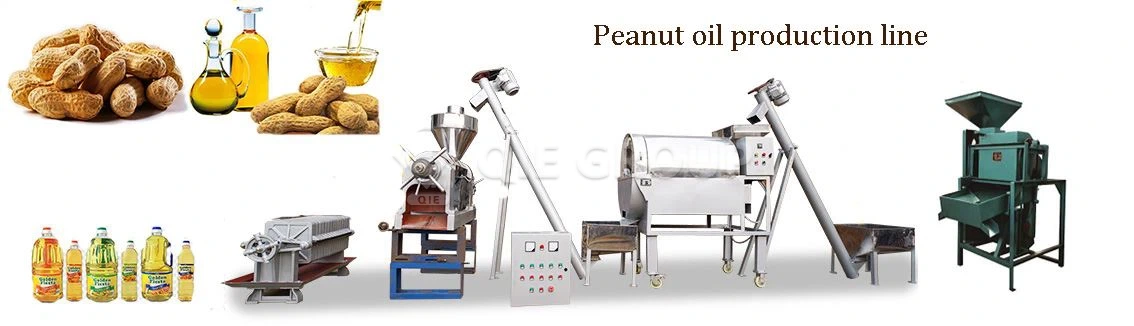
Raw peanuts are cleaned to remove stones, dust, metal particles, and other impurities. Depending on the raw material and process design, shelling, crushing, flaking, and cooking or conditioning are used to prepare the peanuts for oil extraction.
Main equipment: vibrating screens, destoners, magnetic separators, peanut shellers, crushers, flaking rollers, and cookers or conditioners.
Prepared peanuts are fed into screw oil presses to extract oil mechanically. Depending on the production line design, pressing equipment can be configured for direct oil production or pre-pressing before solvent extraction.
Main equipment: screw oil presses, oil collection systems, and crude oil filters.
For production lines using pre-pressing and solvent extraction, the pre-pressed cake is processed in an extractor to recover the remaining oil. The resulting miscella is processed through evaporation and stripping, while the wet meal passes through desolventizing, drying, and cooling.
Typical process equipment: an extractor, evaporators, a stripping system, a DTDC desolventizer-toaster-dryer-cooler, and solvent recovery equipment.
Under suitable operating conditions, the solvent extraction system can be designed for a residual oil content in meal of ≤0.8% and solvent consumption of ≤ 1.5 kg per ton of processed material. Actual performance depends on the process configuration, raw material, and operating conditions.
Crude peanut oil is filtered to remove suspended solids. If refined peanut oil is required, a refining system can be added to remove phospholipids, free fatty acids, pigments, and undesirable odors.
Depending on the crude oil quality and target product specifications, the refining process may include degumming, deacidification, bleaching, and deodorization. Dewaxing or other treatment can be incorporated when required.
Main equipment: oil filters, degumming tanks, separation equipment, bleaching vessels, deodorization systems, and optional dewaxing equipment.
The equipment configuration depends on the selected extraction method, processing capacity, and product requirements.
| Processing Stage | Main Equipment |
|---|---|
| Cleaning | Vibrating screen, destoner, magnetic separator |
| Pre-treatment | Sheller, crusher, flaking roller, cooker or conditioner |
| Mechanical pressing | Screw oil press, crude oil filter |
| Solvent extraction | Pre-press, extractor, evaporators, stripping system, DTDC, solvent recovery system |
| Oil refining | Degumming equipment, deacidification system, bleaching vessel, deodorization tower |
| Oil handling | Pumps, pipelines, storage tanks, conveying equipment |
For solvent extraction projects, the design must also account for solvent containment, recovery, ventilation, and applicable fire and process safety requirements.
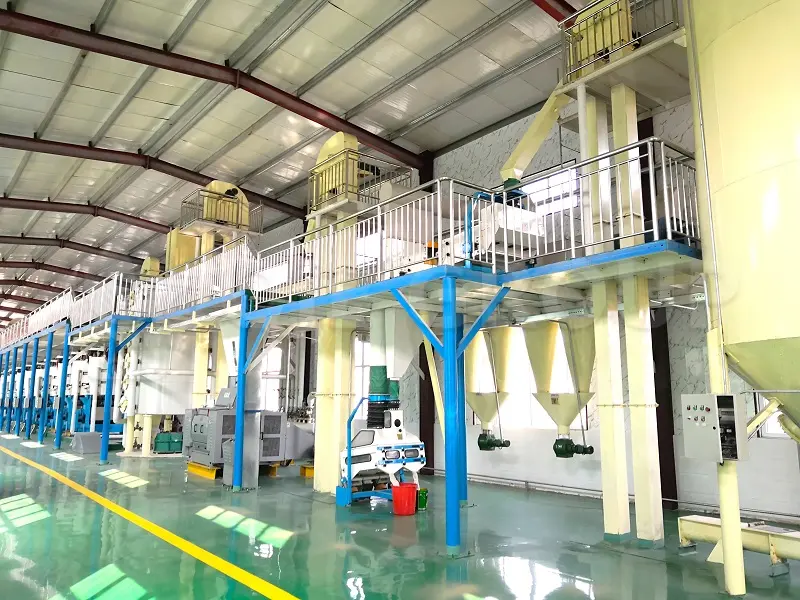
The capacity of a peanut oil production line is generally measured by the amount of raw material processed per day (TPD). Finished oil output is different from raw material throughput and depends on oil content, shelling requirements, extraction efficiency, and refining losses.
Peanuts typically contain approximately 45–55% oil, although the actual content varies with variety, moisture, and raw material quality. This figure represents the oil content of the raw material, not the guaranteed oil yield of the production line.
We can determine the appropriate equipment specifications and production line configuration based on the actual project requirements.
A peanut oil production line can be supplied with or without a refining system.
For refined edible peanut oil, the typical refining stages include:
Removes phospholipids and other gum-forming impurities.
Reduces free fatty acids through a suitable chemical or physical refining process.
Removes pigments and selected impurities using adsorbents.
Uses steam under high-temperature, high-vacuum conditions to remove undesirable odors and volatile compounds.
The final refining configuration depends on crude oil quality and the required product specifications. Production lines designed for flavor-rich peanut oil may use a different treatment approach to preserve characteristic aroma.
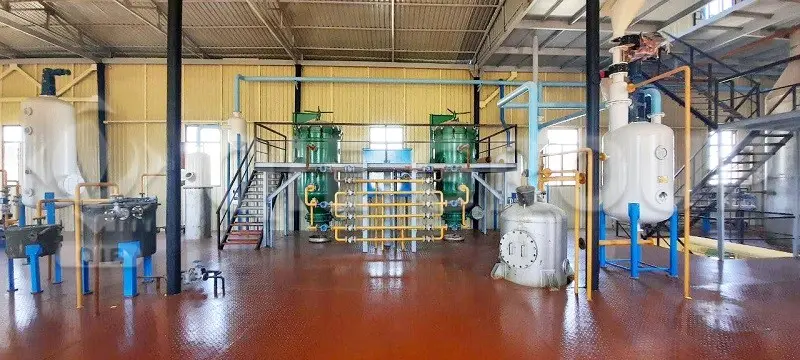
QIE configures peanut oil production lines according to raw material conditions, processing capacity, extraction method, final oil requirements, and available plant utilities.
To determine a suitable configuration, please provide:
Contact QIE Group to discuss your peanut oil production line and request an equipment configuration and quotation tailored to your project.
peanut oil production lines integrate peanut pre-treatment, mechanical pressing or solvent extraction, and optional oil refining equipment. Customized configurations are available to meet different processing capacities, raw material conditions, and finished oil quality requirements.
If you wanna to get more details about You can send E-mail to [email protected]. You can consult our professional engineer and specialized sales team with leave a message in below form.We will contact with you ASAP.You also can visit our factory in Henan,China.


